

 Česky English

16. 4. – 18. 4. 2027
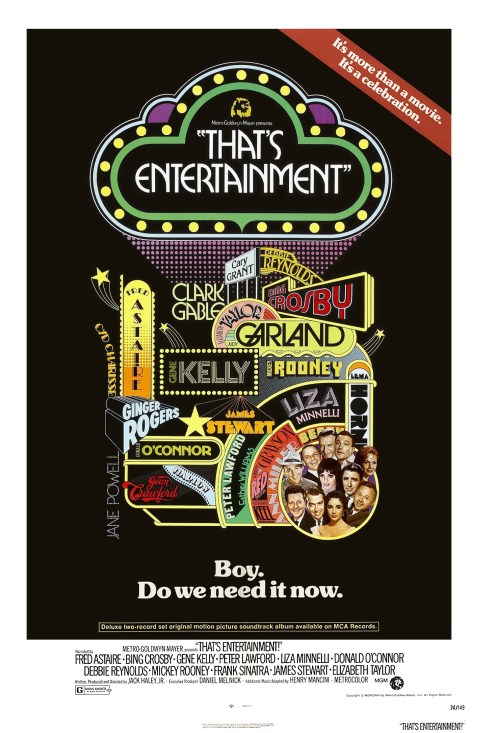
That's Entertainment!
 Original title: That's Entertainment!
Director: Jack Haley jr.
Production: 1974, USA
Length: 135 min.


Screened:
KRRR! 2026: 70mm 1.85:1, Colours partly faded, MG 6ch, Spoken language: English, Subtitles: Czech, SwedishAnnotation for KRRR! 2026
Bond films, Singing in the Rain, The Pink Panther, Tom and Jerry, Rocky, 21 Jump Street, The Silence of the Lambs, A Star is Born or 2001: A Space Odyssey? However diverse this group of works may seem, one thing unites them: at the beginning of each of them we can see a roaring lion. This is the iconic logo of the legendary film studio Metro‑Goldwyn‑Mayer aka MGM, founded in 1924 by American businessman Marcus Loew. And although we associate this powerful studio with a wide range of genres, the creators of the film That's entertainment! decided to pay tribute primarily to its musicals on the occasion of the studio's fiftieth anniversary.
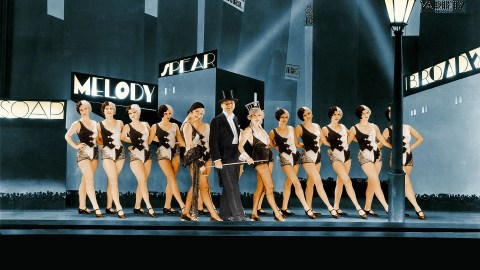
MGM made a significant impact on the history of this genre, especially in 1929, 1939 and 1949, when the famous films The Broadway Melody (historically the second Oscar winner for Best Picture), The Wizard of Oz and On the Town were made. However, the real golden era of MGM musicals can be considered the 1950s, when the studio set trends and made classics such as An American in Paris (1951), Singing in the Rain (1952), The Band Wagon (1953) and Gigi (1958). And because in 1974 the MGM studio had not had many reasons to be happy for some time, its annual editing project became a magnificent memory of its most positive, most danceable and most sing‑along works.
And this celebration took the form of the compilation film That's entertainment!, directed by Jack Haley Jr., who had experience with editing projects. The most iconic musical numbers created by the studio during the times when it was considered the most successful of all are presented – and of course none of the above‑mentioned ones are missing. The film is accompanied by the acting stars of this era, such as Gene Kelly, Fred Astaire, Debbie Reynolds and Frank Sinatra, who recall the heights of Hollywood musicals and remind the viewer of how influential the MGM studio really was in its time. The studio representatives themselves did not expect that That's entertainment! would have such a strong response from the audience, let alone become its most successful in that year – and was rather intended to serve as a jubilee memory of bygone times. This is also reflected in its rhetoric and setting, where a large number of interviews with former stars were conducted on old, abandoned and dilapidated film sets. Today, we can also perceive the film in its dual documentary value, i.e. not only as a showcase of one line of studio work, but also as a way of framing its own history.


