

 Česky English

16. 4. – 18. 4. 2027
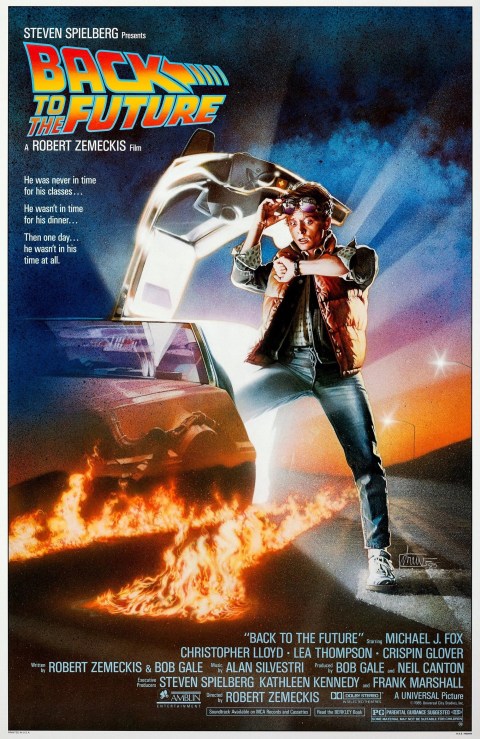
Back to the Future
 Original title: Back to the Future
Director: Robert Zemeckis
Production: 1985, USA
Length: 116 min.


Screened:
KRRR! 2026: 70mm 2.2:1, Colours intact, MG 6ch, Spoken language: English, Subtitles: CzechAnnotation for KRRR! 2026
Go back to the future in a format that definitely doesn't belong only in the past!
In Back to the Future, we follow the teenage hero Marty, who, through his friend's invention, accidentally travels thirty years into the past. He finds himself in 1955, where he almost causes his parents to not fall in love, thus endangering his own existence. Back to the Future itself did not premiere thirty years ago, but forty years ago... and at first it really didn't look like the audience success that it eventually became, grossing $200 million in American cinemas alone, let alone legendary science fiction.
Screenwriters Robert Zemeckis and Bob Gale met as classmates at the USC School of Cinema almost another ten years before they started writing the story and have been collaborating together since their studies. Gale came up with the idea when he found his father's old yearbook and wondered if he and his father had been friends in high school. However, it took a long time before they pitched the idea to a Hollywood studio, which was eventually successful thanks to Steven Spielberg, who had previously worked with both of them and actively supported the creators and their bold idea.
The film plays with the 1980s nostalgia for the 1950s, which meant an imaginary ideal, i.e. a house in the suburbs, a car in the garage and an organised family. President Ronald Reagan was an actor in the 1950s, and his later politics were also rooted in the 1950s. And when a line in the film mentions Reagan, Reagan himself is said to have forced the film to stop, rewind and play the scene again. However, Back to the Future was not the only film to work with the aesthetics of the 1950s during the 1980s – and, like them, to criticise the illusion of their idyll.
Today, Back to the Future is considered a cult classic of its genre, which its creators followed with a second and third installment – and a large number of later films, TV series and computer games quote or refer to it. It regularly appears on lists of films that you must see before you die, and in 2007 the Library of Congress decided to preserve it for all generations who will return to it in the future.


