

 Česky English

16. 4. – 18. 4. 2027
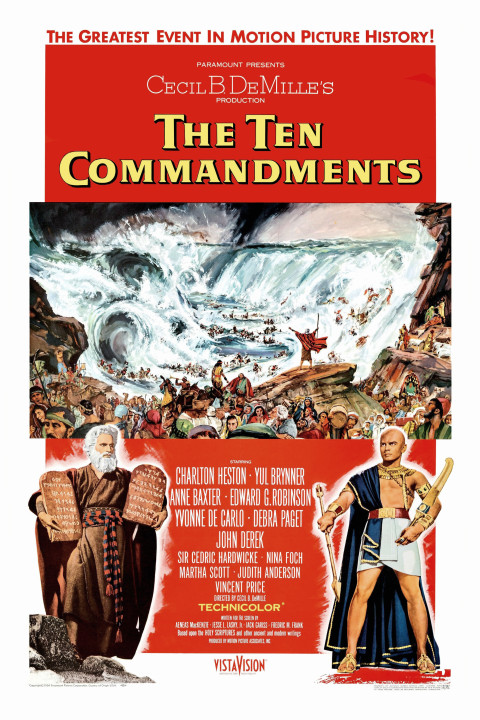
The Ten Commandments
 Original title: The Ten Commandments
Director: Cecil B. DeMille
Production: 1956, USA
Length: 230 min. + intermission


Screened:
KRRR! 2026: 70mm 2.2:1, Colours faded, Digital Sync, Spoken language: English, Subtitles: CzechAnnotation for KRRR! 2026
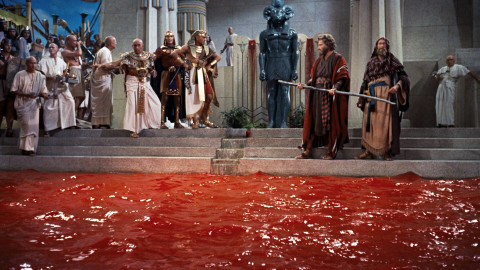
The film The Ten Commandments was released in 1956 by director Cecil B. DeMille. We are in ancient Egypt, where a pharaoh rules and his slaves, including the Hebrews, are exiled from their country. In order to survive, Moses is sent as a small child in a basket down the Nile River, where he is found on the banks by the Egyptian queen and adopted as her own. He is raised in luxury and receives an education, but he also learns the reality of his subjects, becomes close to them and gradually learns about his Hebrew origins. He realizes that he has been living a lie in the palace and must free his people from the pharaoh's rule and return with them to the "promised land". They rebel, and after the so‑called ten plagues of Egypt are sent, they leave with other Hebrews into the desert…
The original story can be found in the Bible, but the creators, led by director Cecil B. DeMille, also drew on other books, and the main source was the novel Prince of Egypt by Dorothy Clarke Wilson from 1949. This was not DeMille's first adaptation of the biblical Exodus, as he had already adapted it as a silent film in 1923. After thirty‑three years, he returned to the story from a different perspective… this time with sound, in colour, and in a wide format, and at the same time concluded his career with it. And he did so magnificently, because with a budget of thirteen million American dollars, The Ten Commandments was the first film to exceed the ten million mark. However, it became the highest‑grossing film of the year, grossing over $18 million in theatres.
Although the film was nominated for seven Oscars upon its release, including Best Picture, it ultimately won only one special effects award. In 1999, it was preserved by the Library of Congress, and nine years later, the American Film Institute ranked it the tenth best film in the genre of blockbuster films. However, it is also a vibrant part of cultural life, thanks to the fact that American television has included it as an integral part of Easter broadcasts since 1973.


